

The Quality That Sets Us Apart

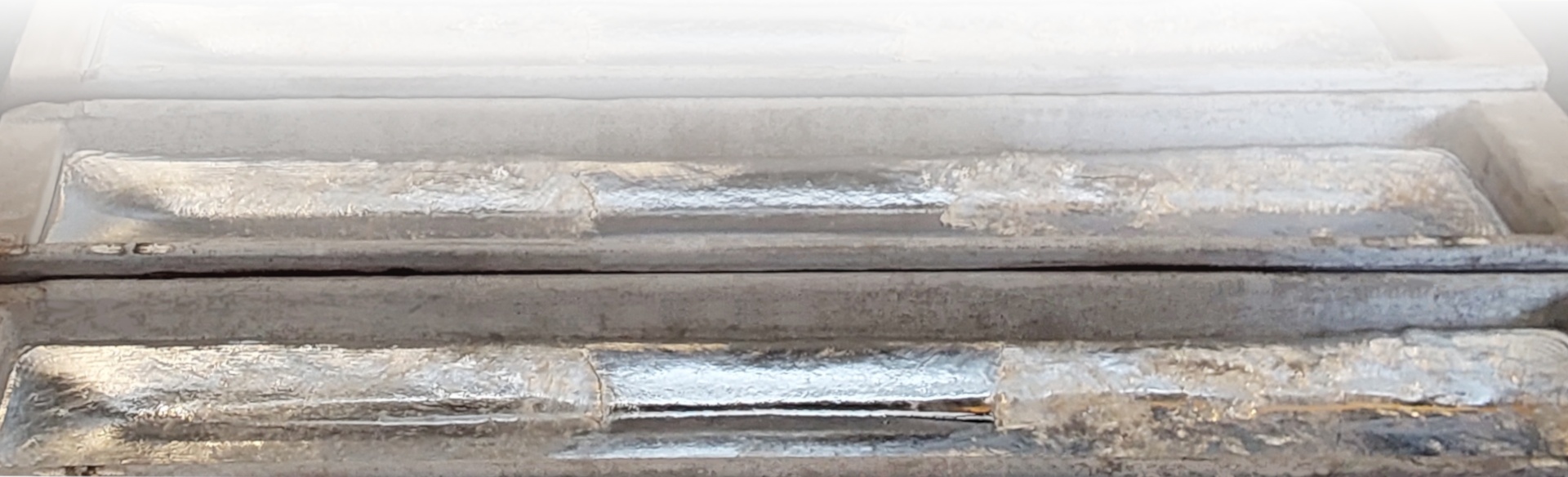
The shape of Aluphoenix’s ingot made in Riese Pio X plant (IT) is the result of an accurate benchmark between the needs of European customers and the offer on the market.
The weight, size and shape are optimal for the use of the ingot both manually and through the use of forklift trucks.
The ergonomics of the ingot allow the piles to remain intact and to preserve the integrity and health of the handling staff.
The ingot is cast in gravity in a line made ad hoc to the highest technological and metallurgical levels of the industry. Aluminium is de-gassed and filtered in line.
The pouring phase of liquid aluminium, filtered and de-gassed, in the shell line, has been developed to avoid intra-crystalline oxidation and gas inclusions.
The free solidification surface of Aluphoenix ingots is characterized by its high cleanliness and absence of oxidation and spongy skin, and marks a metallurgical – qualitative benchmark in the market.
Stacks and Packaging
The forming line of the stacks has been designed and developed according to the logic of lean manufacturing, and allows to realize automatically different types of stacks most wanted on the market:
- Single stack of different heights
- Double stacks
- Stacks with internal or external feet
The line is fully IT-integrated with the company’s ERP software and allows to identify and pack the stacks according to the specifications of each customer.
The stacks are tied with two (2) high-strength plastic straps on the grip side of the forklift truck.
They are identified by a yellow weather resistant label, which reports the number and weight of the individual stacks and other information requested by customers, such as those necessary for its traceability.
On Customer’s request, the stacks can be protected by a heat-shrinkable nylon.
Specifications / Standards (Normative)
Aluphoenix is able to produce customised aluminium alloys in accordance with the technical specifications requested by the customer.
Aluphoenix produces alloys in accordance with the following technical specifications:
- EN 1676 – European Standard for aluminium alloy castings used in the production of castings complying with EN 1706;
- EN 601 – Standard specifying the chemical composition of food-contact cast pieces;
- ISO 17615 – International Standard for aluminium alloy castings used in the production of castings conforming to ISO 3522;
- ASTM 179-14 – American Standard for casting aluminum alloy rolls used for casting production with all casting processes;
- JIS H 2211 -Japanese Standard for Aluminum Casting Parts Used in the Production of JIS H 2502 Compliant Castings.
Alloys conforming to substituted standards are also produced at the customer’s request, such as:
- Italian standard UNI 3039; 3040; 3041; 3042; 3043; 3044; 3045; 3046; 3048; 3050; 3051; 3052; 3054; 3055; 3056; 3057; 3058; 3059; 3599; 3600; 3601; 3602; 4513; 5073; 5074; 5075; 5076; 5077; 5079; 5080; 6250; 6251; 6252; 6253; 7363; 7369; 7963; 7964; 7369; 8024; 10430;
- the replaced German standards DIN 1725;
- the replaces French standards NF A57-702;
- the English standards BS 1490.
EN 1676 e EN 1706
The standard EN 1676, “Aluminium and aluminium alloys – Aluminium alloy ingots for remelting”, defines the quality requirements for aluminium alloy ingots for remelting.
In addition, the standard defines the classification, designations and chemical compositions of aluminium alloys for remelting.
EN 1706, “Aluminium and aluminium alloys – Castings – Chemical Composition and Mechanical Properties”, specifies the limits of the chemical composition of castings and the mechanical properties of separately cast samples
- EN AB 21000 – Al Cu4MgTi
- EN AB 41000 – Al Si2MgTi
- EN AB 42200 – AlSi7Mg0.6
- EN AB 43000 – Al Si10Mg
- EN AB 43300 – Al Si9Mg
- EN AB 44000 – Al Si11
- EN AB 44300 – Al Si12(Fe)(a)
- EN AB 44600 – Al Si10Mnb
- EN AB 45300 – Al Si5Cu1Mg
- EN AB 45600 – Al Si7Cu1Mg0.6
- EN AB 46200 – Al Si8Cu3
- EN AB 46500 – Al Si9Cu3(Fe)(Zn)
- EN AB 47100 – Al Si12Cu1(Fe)
- EN AB 48100 – Al Si17Cu4Mg
- EN AB 51200 – Al Mg9
- EN AB 51500 – Al Mg5Si2Mn
- EN AB 21100 – Al Cu4Ti
- EN AB 42000 – Al Si7Mg
- EN AB 42300 – AlSi7(Mg)
- EN AB 43100 – Al Si10Mg(b)
- EN AB 43400 – Al Si10Mg(Fe)
- EN AB 44100 – Al Si12(b)
- EN AB 44400 – Al Si9
- EN AB 45000 – Al Si6Cu4
- EN AB 45400 – Al Si5Cu3
- EN AB 46000 – Al Si9Cu3(Fe)
- EN AB 46300 – Al Si7Cu3Mg
- EN AB 46600 – Al Si7Cu2
- EN AB 47200 – Al Si12(Fe)
- EN AB 48200 – Al Si15Cu3MgFe
- EN AB 51300 – Al Mg5
- EN AB 71100 – Al Zn10Si8Mg
- EN AB 21200 – Al Cu4MnMg
- EN AB 42100 – AlSi7Mg0.3
- EN AB 42400 – AlSi7MnMgb
- EN AB 43200 – Al Si10Mg(Cu)
- EN AB 43500 – Al Si10MnMg(b)
- EN AB 44200 – Al Si12(a)
- EN AB 44500 – Al Si12(Fe)(b)
- EN AB 45100 – Al Si5Cu3Mg
- EN AB 45500 – Al Si7Cu0.5Mg
- EN AB 46100 – Al Si11Cu2(Fe)
- EN AB 46400 – Al Si9Cu1Mg
- EN AB 47000 – Al Si12(Cu)
- EN AB 48000 – Al Si12CuMgNi
- EN AB 51100 – Al Mg3
- EN AB 51400 – Al Mg5(Si)